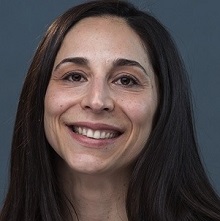
Emma
Leifer

Investigating the Crystal-liquid Interfacial Stiffness in Colloids
Abstract profile. Full document pending author claim.
Authors:
Emma Leifer, Max Jiang, Frans Spaepen, David Weitz
Date Created:
2025-01-01
Course Title:
Professor:
Not specified
About Paper:
The interface between a crystal and a surrounding liquid is of the crystal-liquid interface known as interfacial stiffness. Using of fundamental interest in materials science. Analysis of the confocal microscopy, we obtained high quality, three-dimensional properties of the crystal-liquid interface can elucidate mechanisms images of a colloidal system containing the polymer polyethylene of nucleation and crystal growth, and the origins of particle oxide (PEO). Our system included formamide, a solvent that coarsening. Colloidal systems, in which micrometer-size particles introduces a density difference between colloidal particles and are suspended in a fluid background, serve as an ideal model the surrounding medium, and ensures that the refractive index is system to understand the structure and dynamics of crystal- constant throughout the colloid. We then extracted images of liquid interfaces at the single particle-level. Crystal formation the crystal-liquid interface and created a topographical map of occurs when colloidal particles sediment to the bottom of the fluctuations at the interface. We are using the capillary fluctuation chamber as the result of a difference in density between the method (CFM) to derive a value that represents the frequency particles and the surrounding medium. Addition of polymers to a and magnitude of fluctuations which, in turn, are related to the colloid can induce attraction between colloidal particles through interfacial stiffness by statistical mechanics. We will compare a phenomenon known as the depletion interaction. Here, we our calculated value to the value reported in the literature for the analyzed the effect of adding different concentrations of polymers stiffness of such an interface in the absence of a polymer. We are to a colloid, before any crystals had formed, to investigate the also designing additional experiments to test the effects of other effect of different interparticle attractions on a particular propertyolymer concentrations on interfacial stiffness. SynthesisandCharacterizationofPhenoxazinesasaNovelCoreforOxygen- Stable eCCC Kasie Leung, Abdulrahman Alfaraidi, Richard Liu Harvard College | Lowell House | Chemistry and Physics | 2027 As climate change begins to rapidly accelerate, it is necessary to synthesized through a novel route, which was easily amenable develop sustainable platforms for removing carbon emissions. to derivatization. Then, molecules were characterized by cyclic Unlike traditional sorbents, which bind CO 2 irreversibly, voltammetry, electrochemical flow cell cyclicing, and eCCC. As electrochemical carbon capture and concentration (eCCC) uses expected, there existed a linear free energy relationship between redox-active organic molecules to form an adduct with CO in2the the redox potential of a molecule, and its binding affinity for 2O . reduced form, which is released upon oxidation. However, one Promisingly, one phenoxazine displayed strong positive deviation challenge is that O2, which comprises 3% of a post-combustion from this tradeoff in equilibrium coefficients. To understand gas stream, can competitively oxidize the reduced molecule before whether this advantage translates to eCCC, which is controlled by CO is bound. This work studies phenoxazines, a class of redox- kinetics, further work is necessary. The discovery of a molecule active organics, which we hypothesize to be more oxygen-stable which demonstrates increased oxygen stability while retaining than previously explored molecules due to their higher redox efficacy in CO 2apture would be a promising advance towards potentials. To begin, several water-soluble phenoxazines were carbon-negative technologies. 108 Program for Research in Science and Engineering Decoding Epileptic Neural Dynamics: In Context Learning with Pre-Trained Models Catherine Li, Arnau Marin-Llobet, Jia Liu Harvard College | Kirkland House | Electrical Engineering | 2027 Decoding brain signals from intracranial EEG (iEEG) recordings WeuselabelediEEGsegmentsfrompubliclyavailablemulticenter of drug-resistant epileptic seizures is a well-known challenge, neural and expert labelled datasets recorded from anonymized and numerous deep-learning solutions have been proposed to drug-resistant epilepsy patients that consented to data usage. The classify seizure onset zones (SOZ). However, due to significant data is collected from patients in an awake and resting state, variabilityinintracranialrecordinghardwareandindividualhuman and the dataset contains over 300,000 three-second segments neurophysiology, these models often perform poorly when applied labeledaspathological,physiological,orartifactualactivity. Using to generalized settings. This leads to time-consuming retraining structured prompt engineering, we compare the classification and/or fine-tuning of traditional deep learning (DL) models, which performance of pre-trained open-sourced LLMs across different may still fail on new datasets. architectures and sizes (e.g., Google Gemma-3B, 12B, 27B), comparing the output classification accuracy against true values To address this, we explore whether pre-trained generalized large language (LLM) and vision-language models can accurately and analyzing tradeoffs between accuracy and runtime. decode epileptiform signals using few-shot learning approaches. Our goal is to assess whether in-context learning using pre-trained LLMs have shown strong performance in zero/few-shot settings models can mitigate the need for model retraining across diverse across diverse domains, and we hypothesize that similar clinical datasets and hardware platforms. By leveraging pre- capabilities can be extended to brain signal classification, trained, general-purpose models for neural signal decoding in previously addressed using conventional DL techniques. Our awake resting-state patients with epilepsy, we aim to identify objective is to determine whether in-context learning with large scalable approaches that may extend to other brain states, such as models can provide consistent SOZ prediction accuracy across consciousness or sleep. diverse iEEG datasets without retraining. Determining the Necessity and Therapeutic Potential of Axon Receptors
Abstract:
The interface between a crystal and a surrounding liquid is of the crystal-liquid interface known as interfacial stiffness. Using of fundamental interest in materials science. Analysis of the confocal microscopy, we obtained high quality, three-dimensional properties of the crystal-liquid interface can elucidate mechanisms images of a colloidal system containing the polymer polyethylene of nucleation and crystal growth, and the origins of particle oxide (PEO). Our system included formamide, a solvent that coarsening. Colloidal systems, in which micrometer-size particles introduces a density difference between colloidal particles and are suspended in a fluid background, serve as an ideal model the surrounding medium, and ensures that the refractive index is system to understand the structure and dynamics of crystal- constant throughout the colloid. We then extracted images of liquid interfaces at the single particle-level. Crystal formation the crystal-liquid interface and created a topographical map of occurs when colloidal particles sediment to the bottom of the fluctuations at the interface. We are using the capillary fluctuation chamber as the result of a difference in density between the method (CFM) to derive a value that represents the frequency particles and the surrounding medium. Addition of polymers to a and magnitude of fluctuations which, in turn, are related to the colloid can induce attraction between colloidal particles through interfacial stiffness by statistical mechanics. We will compare a phenomenon known as the depletion interaction. Here, we our calculated value to the value reported in the literature for the analyzed the effect of adding different concentrations of polymers stiffness of such an interface in the absence of a polymer. We are to a colloid, before any crystals had formed, to investigate the also designing additional experiments to test the effects of other effect of different interparticle attractions on a particular propertyolymer concentrations on interfacial stiffness. SynthesisandCharacterizationofPhenoxazinesasaNovelCoreforOxygen- Stable eCCC Kasie Leung, Abdulrahman Alfaraidi, Richard Liu Harvard College | Lowell House | Chemistry and Physics | 2027 As climate change begins to rapidly accelerate, it is necessary to synthesized through a novel route, which was easily amenable develop sustainable platforms for removing carbon emissions. to derivatization. Then, molecules were characterized by cyclic Unlike traditional sorbents, which bind CO 2 irreversibly, voltammetry, electrochemical flow cell cyclicing, and eCCC. As electrochemical carbon capture and concentration (eCCC) uses expected, there existed a linear free energy relationship between redox-active organic molecules to form an adduct with CO in2the the redox potential of a molecule, and its binding affinity for 2O . reduced form, which is released upon oxidation. However, one Promisingly, one phenoxazine displayed strong positive deviation challenge is that O2, which comprises 3% of a post-combustion from this tradeoff in equilibrium coefficients. To understand gas stream, can competitively oxidize the reduced molecule before whether this advantage translates to eCCC, which is controlled by CO is bound. This work studies phenoxazines, a class of redox- kinetics, further work is necessary. The discovery of a molecule active organics, which we hypothesize to be more oxygen-stable which demonstrates increased oxygen stability while retaining than previously explored molecules due to their higher redox efficacy in CO 2apture would be a promising advance towards potentials. To begin, several water-soluble phenoxazines were carbon-negative technologies. 108 Program for Research in Science and Engineering Decoding Epileptic Neural Dynamics: In Context Learning with Pre-Trained Models Catherine Li, Arnau Marin-Llobet, Jia Liu Harvard College | Kirkland House | Electrical Engineering | 2027 Decoding brain signals from intracranial EEG (iEEG) recordings WeuselabelediEEGsegmentsfrompubliclyavailablemulticenter of drug-resistant epileptic seizures is a well-known challenge, neural and expert labelled datasets recorded from anonymized and numerous deep-learning solutions have been proposed to drug-resistant epilepsy patients that consented to data usage. The classify seizure onset zones (SOZ). However, due to significant data is collected from patients in an awake and resting state, variabilityinintracranialrecordinghardwareandindividualhuman and the dataset contains over 300,000 three-second segments neurophysiology, these models often perform poorly when applied labeledaspathological,physiological,orartifactualactivity. Using to generalized settings. This leads to time-consuming retraining structured prompt engineering, we compare the classification and/or fine-tuning of traditional deep learning (DL) models, which performance of pre-trained open-sourced LLMs across different may still fail on new datasets. architectures and sizes (e.g., Google Gemma-3B, 12B, 27B), comparing the output classification accuracy against true values To address this, we explore whether pre-trained generalized large language (LLM) and vision-language models can accurately and analyzing tradeoffs between accuracy and runtime. decode epileptiform signals using few-shot learning approaches. Our goal is to assess whether in-context learning using pre-trained LLMs have shown strong performance in zero/few-shot settings models can mitigate the need for model retraining across diverse across diverse domains, and we hypothesize that similar clinical datasets and hardware platforms. By leveraging pre- capabilities can be extended to brain signal classification, trained, general-purpose models for neural signal decoding in previously addressed using conventional DL techniques. Our awake resting-state patients with epilepsy, we aim to identify objective is to determine whether in-context learning with large scalable approaches that may extend to other brain states, such as models can provide consistent SOZ prediction accuracy across consciousness or sleep. diverse iEEG datasets without retraining. Determining the Necessity and Therapeutic Potential of Axon Receptors
Source:
Harvard / Kate Lee, Reese Caldwell, David Liu / 2025
Topics:
crystal, model, interface, particle, using, molecule, stiffnes, colloidal, learning, pre, dataset, interfacial
Co-authors:
@emmaleifer313 , @maxjiang314 , @fransspaepen315 , @davidweitz316