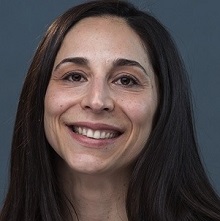
Sarah
Rose Odutola
118 Program for Research in Science and Engineering The Role of B Cells in the Maintenance of Kidney Allograft Tolerance
Abstract profile. Full document pending author claim.
Authors:
Sarah Rose Odutola, Alessandro Alessandrini
Date Created:
2025-01-01
Course Title:
Professor:
Not specified
About Paper:
Inspontaneouslytolerantmousetransplantmodels, localizedintra- results showed that the injected B cells did not induce kidney graft aggregates of lymphocytes subdue the host immune response allograft rejection but were found in the allograft. We also to grafts. scRNA-seq data from kidney allografts revealed that the injected FGL2 mRNA into B6 mice that subsequently received infiltrating population shifted from being T cell-rich to B cell-rich abdominal heart allograft from DBA mice. We found that bysixmonthspost-transplant. Ourworkthusfocusesondiscerning Fgl2 expression was upregulated post-transplant, and survival was the role of B cells in natural tolerance. The genes studied are significantly improved. Mice that received the injection of full- Fgl2, which encodes the secretory protein fibrinogen-like protein length FGL2 mRNA exhibited an increase in allograft survival to 2 (FGL2), and Fcgr2b, which encodes FGL2’s receptor, FcγRIIB. 13 days, compared to 9 days for mice that did not (P = 0.03). These This receptor-ligand interaction indirectly promotes the activity ofesultssuggestthatFgl2andFcgr2bmayplayaroleinmaintaining regulatory B cells. A deeper understanding of natural tolerance natural tolerance. could lead to reduced clinical reliance on immunosuppressants, which expose patients to deleterious complications. Our future studies will explore how tolerance is affected by two roundsofinjectedBcells,onebeforeandoneafterthetransplant,to We utilized full-spectrum flow cytometry, scRNA-seq, cell increase the total number of B cells post-transplant. They will also isolation,andELISAtoanalyzetheexpressionofFgl2andFcgr2b. examine how it is altered by two rounds of injected FGL2 mRNA We injected B cells from B6.Fcgr2b KO mice into B6 CD45.1 over a similar period to combat the transience of mRNA. mice to see if renal graft rejection would be expedited. Preliminary The Impact of the Genome on the Development of Rare Disorders: Characterization and Bioinformatic Analysis of Rare and Undiagnosed Patients Samuel N. Oji, Evangelos Theodorou, Lauren Briere, David Sweetser Harvard College | Cabot House | Human Developmental and Regenerative Biology | 2028 Rare genetic disorders often present significant diagnostic and a natural history and patient registry database that captures management challenges. These challenges stem from our limited demographic, phenotype, and genetic data for patients with understanding of the full range of phenotypic variation in known IQSEC2-related disorder, a rare neurodevelopmental condition. rare disorders and the constraints in interpreting genetic test resThis work involves abstracting information from clinical and for patients that remain undiagnosed. Even with advances in diagnostic records to better characterize the phenotypic spectrum clinical genomic sequencing, many patients suspected of having of the disorder and define genotype–phenotype correlations. Such geneticconditionsremainundiagnosed. AttheCenterforGenomic information will support counseling for families, the development Medicine, our research aims to identify and characterize novel of clinical care guidelines, and the design of future clinical and rare genetic disorders, contributing to the broader body trials. In a separate phase of this project, we will be performing of disease knowledge. To achieve this, we employ strategies bioinformatic analyses of genetic data of undiagnosed patients. such as deep phenotyping, genomic sequencing, bioinformatic Through these ongoing efforts, we aim to advance rare disease analyses, metabolomics, medical data extraction, studies in model classification and expand knowledge that will ultimately improve organisms, in vitro functional assessments of variants, and global diagnostic and therapeutic outcomes for individuals affected by research collaborations. In our current focus, we are developing rare genetic disorders. Purification and Crystallization of Ras oncoprotein for use in Electric-field Stimulated Crystallography. Jude Ouerfelli, Harrison Wang, Doeke Hekstra Harvard College | Cabot House | Chemical and Physical Biology | 2028 Ras protein mutants are the second most common protein protein expression before solubilizing. We later purified the mutations underlying cancer and are particularly prevalent in protein by isolating our lysate, conducting anion exchange deadly cancers. Unfortunately, the mechanism of Ras intrinsic chromatography, conducting a nucleotide exchange of GDP for hydrolysis is poorly characterized but involves the ordering of GMPPNP, and finally conducting size exclusion chromatography. switch II, a disordered region composed of residues 60-76 in We were ultimately able to grow protein crystals using purified which dynamic conformational changes take place upon changes protein in varying well solution conditions. Future work will in the active site or binding to other partners. Understanding entail verifying that our grown crystals diffract to high resolution the mutations underlying this switch, then, is pivotal to gaining and have low mosaicity, making them suitable for electric-field insight into therapeutically targeting switch II. Our group believes stimulated crystallography (EF-X). Should this be the case, we that this site and mutants driving its regulation can be uncovered will then gather and refine Ras EF-X data, wherein the crystals using perturbative diffraction methods with time-resolved X-ray will be imaged after exposure to electric field pulses. In doing crystallography to perturb the protein crystal, thereby inducing this, we ultimately hope to gain valuable dynamic and structural structural changes. To eventually reach this point, we transformed information about Ras and its cancer-driving mutations.
Abstract:
Inspontaneouslytolerantmousetransplantmodels, localizedintra- results showed that the injected B cells did not induce kidney graft aggregates of lymphocytes subdue the host immune response allograft rejection but were found in the allograft. We also to grafts. scRNA-seq data from kidney allografts revealed that the injected FGL2 mRNA into B6 mice that subsequently received infiltrating population shifted from being T cell-rich to B cell-rich abdominal heart allograft from DBA mice. We found that bysixmonthspost-transplant. Ourworkthusfocusesondiscerning Fgl2 expression was upregulated post-transplant, and survival was the role of B cells in natural tolerance. The genes studied are significantly improved. Mice that received the injection of full- Fgl2, which encodes the secretory protein fibrinogen-like protein length FGL2 mRNA exhibited an increase in allograft survival to 2 (FGL2), and Fcgr2b, which encodes FGL2’s receptor, FcγRIIB. 13 days, compared to 9 days for mice that did not (P = 0.03). These This receptor-ligand interaction indirectly promotes the activity ofesultssuggestthatFgl2andFcgr2bmayplayaroleinmaintaining regulatory B cells. A deeper understanding of natural tolerance natural tolerance. could lead to reduced clinical reliance on immunosuppressants, which expose patients to deleterious complications. Our future studies will explore how tolerance is affected by two roundsofinjectedBcells,onebeforeandoneafterthetransplant,to We utilized full-spectrum flow cytometry, scRNA-seq, cell increase the total number of B cells post-transplant. They will also isolation,andELISAtoanalyzetheexpressionofFgl2andFcgr2b. examine how it is altered by two rounds of injected FGL2 mRNA We injected B cells from B6.Fcgr2b KO mice into B6 CD45.1 over a similar period to combat the transience of mRNA. mice to see if renal graft rejection would be expedited. Preliminary The Impact of the Genome on the Development of Rare Disorders: Characterization and Bioinformatic Analysis of Rare and Undiagnosed Patients Samuel N. Oji, Evangelos Theodorou, Lauren Briere, David Sweetser Harvard College | Cabot House | Human Developmental and Regenerative Biology | 2028 Rare genetic disorders often present significant diagnostic and a natural history and patient registry database that captures management challenges. These challenges stem from our limited demographic, phenotype, and genetic data for patients with understanding of the full range of phenotypic variation in known IQSEC2-related disorder, a rare neurodevelopmental condition. rare disorders and the constraints in interpreting genetic test resThis work involves abstracting information from clinical and for patients that remain undiagnosed. Even with advances in diagnostic records to better characterize the phenotypic spectrum clinical genomic sequencing, many patients suspected of having of the disorder and define genotype–phenotype correlations. Such geneticconditionsremainundiagnosed. AttheCenterforGenomic information will support counseling for families, the development Medicine, our research aims to identify and characterize novel of clinical care guidelines, and the design of future clinical and rare genetic disorders, contributing to the broader body trials. In a separate phase of this project, we will be performing of disease knowledge. To achieve this, we employ strategies bioinformatic analyses of genetic data of undiagnosed patients. such as deep phenotyping, genomic sequencing, bioinformatic Through these ongoing efforts, we aim to advance rare disease analyses, metabolomics, medical data extraction, studies in model classification and expand knowledge that will ultimately improve organisms, in vitro functional assessments of variants, and global diagnostic and therapeutic outcomes for individuals affected by research collaborations. In our current focus, we are developing rare genetic disorders. Purification and Crystallization of Ras oncoprotein for use in Electric-field Stimulated Crystallography. Jude Ouerfelli, Harrison Wang, Doeke Hekstra Harvard College | Cabot House | Chemical and Physical Biology | 2028 Ras protein mutants are the second most common protein protein expression before solubilizing. We later purified the mutations underlying cancer and are particularly prevalent in protein by isolating our lysate, conducting anion exchange deadly cancers. Unfortunately, the mechanism of Ras intrinsic chromatography, conducting a nucleotide exchange of GDP for hydrolysis is poorly characterized but involves the ordering of GMPPNP, and finally conducting size exclusion chromatography. switch II, a disordered region composed of residues 60-76 in We were ultimately able to grow protein crystals using purified which dynamic conformational changes take place upon changes protein in varying well solution conditions. Future work will in the active site or binding to other partners. Understanding entail verifying that our grown crystals diffract to high resolution the mutations underlying this switch, then, is pivotal to gaining and have low mosaicity, making them suitable for electric-field insight into therapeutically targeting switch II. Our group believes stimulated crystallography (EF-X). Should this be the case, we that this site and mutants driving its regulation can be uncovered will then gather and refine Ras EF-X data, wherein the crystals using perturbative diffraction methods with time-resolved X-ray will be imaged after exposure to electric field pulses. In doing crystallography to perturb the protein crystal, thereby inducing this, we ultimately hope to gain valuable dynamic and structural structural changes. To eventually reach this point, we transformed information about Ras and its cancer-driving mutations.
Source:
Harvard / Harvard College | Quincy House | Neuroscience | 2027 / 2025
Topics:
cell, protein, rare, fgl2, patient, disorder, allograft, mice, genetic, tolerance, clinical, ras