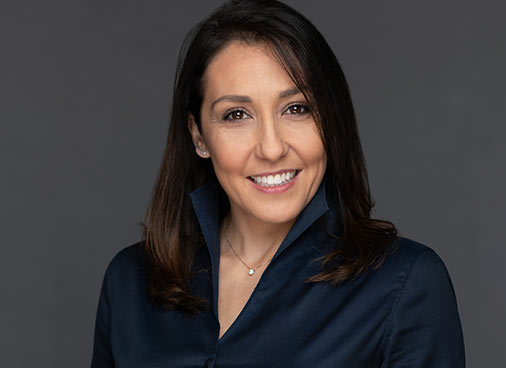
Tahmid
Azam
The Stratification of Autism Spectrum Disorder Using Multi-modal Cluster Analysis of the SPARK Cohort
Abstract profile. Full document pending author claim.
Authors:
Tahmid Azam, Chirag Patel
Date Created:
2025-01-01
Course Title:
Professor:
Not specified
About Paper:
Autism Spectrum Disorder (ASD) is a highly heterogenous, geneticsamples,andenvironmentalinformationfromover150,000 neurodevelopmental condition with a diverse clinical presentation autistic individuals across the United States. We integrate involving many genetic factors. However, the Fifth Edition questionnaire scores, genetic single nucleotide polymorphisms, of the Diagnostic and Statistical Manual of Mental Disorders, and markers of socioeconomic status such as deprivation indices Text Revision (DSM-5-TR) consolidated several conditions into a toformamulti-modalrepresentationofeachparticipant, clustering single ASD diagnosis to improve diagnostic consistency. While using k-means and Gaussian mixture models. previous studies have found evidence for subgroups within As an initial step, we assessed predictability between behavioral individualmodalities, suchasbehaviororgenetics,wehypothesize instruments using supervised linear and non-linear models. Low that integrating multiple modalities into cluster analysis will peak cross-instrument predictability (R = 0.38, 95% CI [0.37, reveal meaningful, robust subgroups hidden within the DSM-5- TR ASD diagnosis. Stratifying ASD in this way could enable 0.39]) supports mutual exclusivity between measured behavioral precise, individualized support strategies for autistic individuals inits which motivates our proposed stratification technique. educational, home, and clinical environments. If our hypothesis is supported, the resulting strata would be We propose a multi-modal, semi-supervised cluster analysis strengthened by the statistical power of the SPARK cohort and the multi-modal nature of the analysis. These subgroups could help to identify subgroups within the Simons Foundation Powering focus research on the mechanisms behind ASD onset and guide Autism Research for Knowledge (SPARK) cohort, the largest precision care, ensuring autistic individuals are neither overlooked ASD-focused study that aggregates behavioral questionnaires, nor overwhelmed, but truly understood. BiocompatibleHydrogelWrap-InjectabledECMPlatformforTargetedAchilles Tendon Regeneration Ezekiel Bajomo, Grace Atteh, Benjamin Freedman Harvard College | Leverett House | Human Developmental and Regenerative Biology | 2028 Over1millionathletessufferfrominjuriestotheirAchillestendons to allow for active protection and regeneration of the injury site annually due to overuse and extreme loading. The most common over excessive scarring. It was hypothesized that a 0.3 mm- course of treatment for these injuries is surgical intervention, thick alginate/acrylamide hydrogel could hold the dECM to the and while often successful, post-surgical patients suffer from tendoninjurysiteandmaintainshapeandadhesionundersimulated reduced range of motion, excessive fibrotic scar tissue that restriphysiological shear and tensile forces. To evaluate whether the tendon gliding, and a lack of full extracellular matrix (ECM) hydrogelpatchcouldprotectthedECMfromloading, arheological regeneration. Current materials used to protect the injury site test is performed on a bovine tendon-dECM-hydrogel composite. during repair suffer from weak mechanical properties, excessive To mimic forces experienced in vivo, an axial force combined with swelling, and a lack of regenerative healing properties. Hydrogels shear loading is applied in a rheometer. Peel tests are performed offer a promising solution due to their tunable mechanical on bovine tendon planks with dECM and the hydrogel wrap in the properties, biocompatibility, and capacity to promote functional center to evaluate the hydrogel’s adhesion and deformation under healing. The objective of this study was to engineer a thin tensile forces. The findings of these studies will lay the foundation alginate/acrylamide hydrogel that can elastically wrap around the for the development of this material from lab to clinic. Additional tendon and anchor an injectable tendon-derived decellularized studies are underway to optimize material biodegradability, anti- extracellularmatrix(dECM)attheinjurysiteofanAchillestendon swelling, and drug loading properties.
Abstract:
Autism Spectrum Disorder (ASD) is a highly heterogenous, geneticsamples,andenvironmentalinformationfromover150,000 neurodevelopmental condition with a diverse clinical presentation autistic individuals across the United States. We integrate involving many genetic factors. However, the Fifth Edition questionnaire scores, genetic single nucleotide polymorphisms, of the Diagnostic and Statistical Manual of Mental Disorders, and markers of socioeconomic status such as deprivation indices Text Revision (DSM-5-TR) consolidated several conditions into a toformamulti-modalrepresentationofeachparticipant, clustering single ASD diagnosis to improve diagnostic consistency. While using k-means and Gaussian mixture models. previous studies have found evidence for subgroups within As an initial step, we assessed predictability between behavioral individualmodalities, suchasbehaviororgenetics,wehypothesize instruments using supervised linear and non-linear models. Low that integrating multiple modalities into cluster analysis will peak cross-instrument predictability (R = 0.38, 95% CI [0.37, reveal meaningful, robust subgroups hidden within the DSM-5- TR ASD diagnosis. Stratifying ASD in this way could enable 0.39]) supports mutual exclusivity between measured behavioral precise, individualized support strategies for autistic individuals inits which motivates our proposed stratification technique. educational, home, and clinical environments. If our hypothesis is supported, the resulting strata would be We propose a multi-modal, semi-supervised cluster analysis strengthened by the statistical power of the SPARK cohort and the multi-modal nature of the analysis. These subgroups could help to identify subgroups within the Simons Foundation Powering focus research on the mechanisms behind ASD onset and guide Autism Research for Knowledge (SPARK) cohort, the largest precision care, ensuring autistic individuals are neither overlooked ASD-focused study that aggregates behavioral questionnaires, nor overwhelmed, but truly understood. BiocompatibleHydrogelWrap-InjectabledECMPlatformforTargetedAchilles Tendon Regeneration Ezekiel Bajomo, Grace Atteh, Benjamin Freedman Harvard College | Leverett House | Human Developmental and Regenerative Biology | 2028 Over1millionathletessufferfrominjuriestotheirAchillestendons to allow for active protection and regeneration of the injury site annually due to overuse and extreme loading. The most common over excessive scarring. It was hypothesized that a 0.3 mm- course of treatment for these injuries is surgical intervention, thick alginate/acrylamide hydrogel could hold the dECM to the and while often successful, post-surgical patients suffer from tendoninjurysiteandmaintainshapeandadhesionundersimulated reduced range of motion, excessive fibrotic scar tissue that restriphysiological shear and tensile forces. To evaluate whether the tendon gliding, and a lack of full extracellular matrix (ECM) hydrogelpatchcouldprotectthedECMfromloading, arheological regeneration. Current materials used to protect the injury site test is performed on a bovine tendon-dECM-hydrogel composite. during repair suffer from weak mechanical properties, excessive To mimic forces experienced in vivo, an axial force combined with swelling, and a lack of regenerative healing properties. Hydrogels shear loading is applied in a rheometer. Peel tests are performed offer a promising solution due to their tunable mechanical on bovine tendon planks with dECM and the hydrogel wrap in the properties, biocompatibility, and capacity to promote functional center to evaluate the hydrogel’s adhesion and deformation under healing. The objective of this study was to engineer a thin tensile forces. The findings of these studies will lay the foundation alginate/acrylamide hydrogel that can elastically wrap around the for the development of this material from lab to clinic. Additional tendon and anchor an injectable tendon-derived decellularized studies are underway to optimize material biodegradability, anti- extracellularmatrix(dECM)attheinjurysiteofanAchillestendon swelling, and drug loading properties.
Source:
Harvard / Harvard College | Eliot House | Mechanical Engineering | 2027 / 2025
Topics:
asd, tendon, hydrogel, analysi, subgroup, force, property, autism, disorder, using, multi, cluster