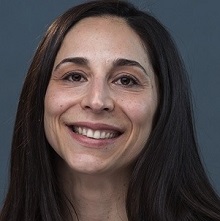
Hailey
Burnette
Papers
Who Watches the Assessors? Self-Dealing in Property Valuations
Abstract profile. Full document pending author claim.
Authors:
Hailey Burnette, Lauren Cohen
Date Created:
2025-01-01
Course Title:
Professor:
Not specified
About Paper:
The fairness and consistency of property tax assessments have processforpersonalbenefit, systematicallyundervaluingtheirown long been concerns in academic and policy discussions, especially properties relative to comparable homes in the same jurisdiction. regarding socioeconomic disparities and the quality of local As PRIMO fellows, we worked to expand the paper’s current data assessment practices. The calculated dues are a function of the set and replicated the study’s methodology in other states. Using property tax rate and the value of the property, the latter of whicvarious methodologies, we collected historical data on property is determined by the appraisals of assessors. The office of an tax assessors in states across the United States. Subsequent cross- assessor requires a moral integrity to fairly assess the value of referencing of LexisNexis and Zillow databases confirmed the citizens’ properties, yet that integrity can be compromised by identity of these assessors and the relative growth of their property assessors who exploit their authority for their own benefit or the values over time. By exploring the extent to which assessors take detriment of others. Recent work by Professors Lauren Cohen advantage of their discretionary authority, we aim to open the and Huazhi Chen gathered evidence in Illinois to show that tax discussion to how decisions made with limited oversight may be assessors may exploit the discretion inherent in the valuation manipulated in other industries as well. Program for Research in
Abstract:
The fairness and consistency of property tax assessments have processforpersonalbenefit, systematicallyundervaluingtheirown long been concerns in academic and policy discussions, especially properties relative to comparable homes in the same jurisdiction. regarding socioeconomic disparities and the quality of local As PRIMO fellows, we worked to expand the paper’s current data assessment practices. The calculated dues are a function of the set and replicated the study’s methodology in other states. Using property tax rate and the value of the property, the latter of whicvarious methodologies, we collected historical data on property is determined by the appraisals of assessors. The office of an tax assessors in states across the United States. Subsequent cross- assessor requires a moral integrity to fairly assess the value of referencing of LexisNexis and Zillow databases confirmed the citizens’ properties, yet that integrity can be compromised by identity of these assessors and the relative growth of their property assessors who exploit their authority for their own benefit or the values over time. By exploring the extent to which assessors take detriment of others. Recent work by Professors Lauren Cohen advantage of their discretionary authority, we aim to open the and Huazhi Chen gathered evidence in Illinois to show that tax discussion to how decisions made with limited oversight may be assessors may exploit the discretion inherent in the valuation manipulated in other industries as well. Program for Research in
Source:
Harvard / Stanford University | Psychology | 2026 / 2025
Topics:
assessor, property, tax, state, value, valuation, assessment, discussion, relative, methodology, integrity, exploit